GDPR and AML obligations operate in parallel, not in conflict. Specific provisions in each framework govern their interaction, with legal bases under UK GDPR explicitly permitting personal data processing for KYC, monitoring, and SAR purposes.

GDPR and AML obligations operate in parallel, not in conflict. Specific provisions in each framework govern their interaction, with legal bases under UK GDPR explicitly permitting personal data processing for KYC, monitoring, and SAR purposes.
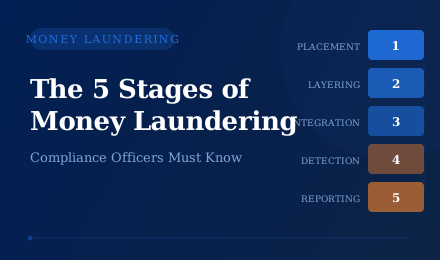
The traditional three-stage model — placement, layering, integration — is necessary but insufficient. Compliance officers must also understand the predicate offence and the concealment mechanisms operating throughout the entire laundering process
Customer Due Diligence (CDD) vs Enhanced Due Diligence (EDD): When to Use Each
CDD and EDD are not alternatives — they sit on a spectrum of due diligence intensity, with the appropriate level determined by the assessed risk of the customer and the business relationship.
What Is a Suspicious Activity Report (SAR) and When Must You File One?
A Suspicious Activity Report is a mandatory legal disclosure filed with financial intelligence authorities when a firm suspects a customer or transaction is connected to money laundering, terrorist financing, or the proceeds of crime.
The Bank Secrecy Act creates binding AML obligations for every US financial institution — from banks and broker-dealers to money services businesses and insurance companies. Non-compliance carries unlimited criminal and civil penalties.
A sanctions screening programme is how regulated firms ensure they never provide financial services to individuals or entities subject to government prohibitions. Learn which lists you must screen against, what triggers a match, and how modern systems handle false positives at scale.
A Politically Exposed Person holds a prominent public role that raises their money laundering risk and triggers Enhanced Due Diligence. Learn who qualifies, what FCA and FATF regulations require, and how automated PEP screening works in practice.
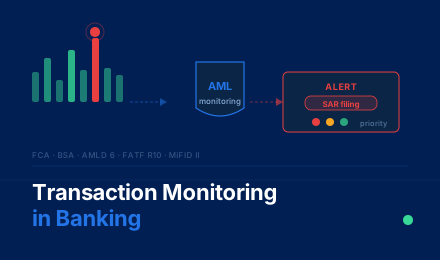
Transaction monitoring is the automated process banks and regulated firms use to detect suspicious activity across customer payments in real time. Learn how it works, what regulations require it, and how modern AML systems separate genuine risk from noise.
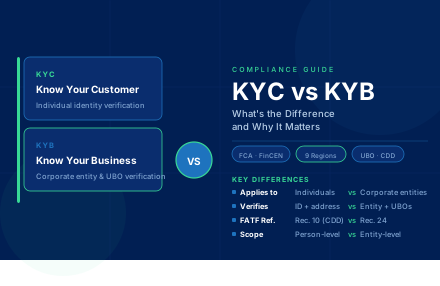
KYC verifies individual customers while KYB verifies corporate entities, directors, and ultimate beneficial owners — two distinct processes with different regulatory requirements. Understanding the difference is fundamental to building a compliant onboarding programme that satisfies FCA, FinCEN, and FATF obligations.
AML compliance is the legal framework of policies, controls, and procedures that every regulated financial institution must implement to detect, prevent, and report money laundering. This guide covers the five core pillars, key regulations across the UK, US, EU, and Middle East, and how technology is modernising compliance programmes.