
 Anti Money Laundering (AML)
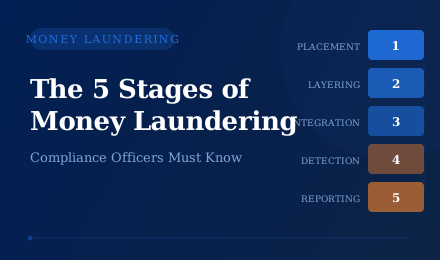
The 5 Stages of Money Laundering Compliance Officers Must Know
The traditional three-stage model — placement, layering, integration — is necessary but insufficient. Compliance officers must also understand the predicate offence and the concealment mechanisms operating throughout the…
 Know Your Business (KYB)
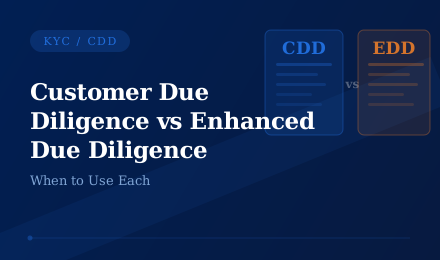
Customer Due Diligence (CDD) vs Enhanced Due Diligence (EDD): When to Use Each
Customer Due Diligence (CDD) vs Enhanced Due Diligence (EDD): When to Use Each CDD and EDD are not alternatives — they sit on a spectrum of due diligence…
 Know Your Customer (KYC)
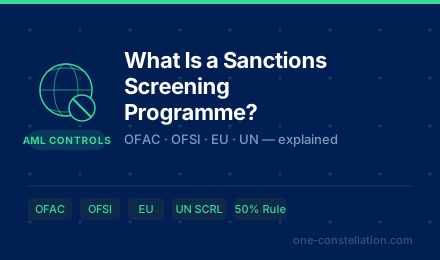
What Is a Sanctions Screening Programme?
A sanctions screening programme is how regulated firms ensure they never provide financial services to individuals or entities subject to government prohibitions. Learn which lists you must screen…
 Know Your Business (KYB)
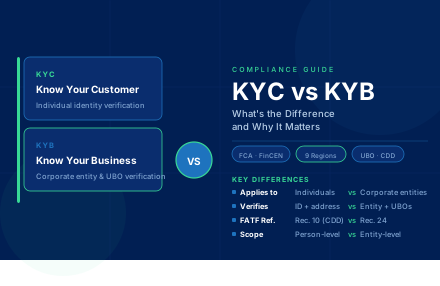
KYC vs KYB: What’s the Difference and Why It Matters
KYC verifies individual customers while KYB verifies corporate entities, directors, and ultimate beneficial owners — two distinct processes with different regulatory requirements. Understanding the difference is fundamental to…
 Anti Money Laundering (AML)
What Is AML Compliance? A Complete Guide for Financial Institutions | One Constellation
AML compliance is the legal framework of policies, controls, and procedures that every regulated financial institution must implement to detect, prevent, and report money laundering. This guide covers…
 Anti Money Laundering (AML)
AML vs KYC: Understanding the Differences, Ensuring Compliance, and Adopting Best Practices
AML is the overarching regulatory framework; KYC is one of its most critical components — and confusing the two leads to compliance gaps that regulators actively penalise. This…