
 Money Laundering
Shell Company Red Flags: How to Spot Front Companies
Shell companies have legitimate uses and are the workhorses of money laundering structures. Distinguishing legitimate use from front-company abuse is one of the harder KYB calls compliance teams…
 Money Laundering
Smurfing & Structuring: Detection Patterns for Compliance Teams
Structuring and smurfing are the foundational placement-stage typologies — and the controls regulators inspect first. This guide covers the definitional difference between the two, six recurring patterns, the…
 Money Laundering
Trade-Based Money Laundering (TBML): Typologies, Red Flags & Detection
Trade-Based Money Laundering exploits the commercial trade system to move illicit value across borders — through over- and under-invoicing, phantom shipments, multiple invoicing, and front-company export schemes. FATF…
 Money Laundering
The MLRO Role: Responsibilities, Reporting Lines & Personal Liability
The Money Laundering Reporting Officer is the only role in a regulated firm that carries personal regulatory liability for the AML programme. The MLRO decides whether to file…
 Compliance
GDPR and AML: How Financial Firms Navigate Both Regulations
GDPR and AML obligations operate in parallel, not in conflict. Specific provisions in each framework govern their interaction, with legal bases under UK GDPR explicitly permitting personal data…
 Anti Money Laundering (AML)
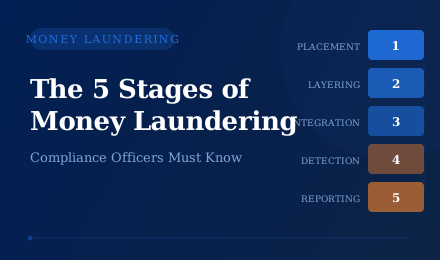
The 5 Stages of Money Laundering Compliance Officers Must Know
The traditional three-stage model — placement, layering, integration — is necessary but insufficient. Compliance officers must also understand the predicate offence and the concealment mechanisms operating throughout the…