
 Transaction Monitoring
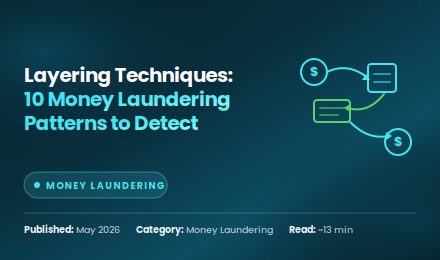
Layering Techniques: 10 Money Laundering Patterns to Detect
Layering is the most operationally complex stage of money laundering — the part where proceeds are moved through transaction chains specifically designed to obscure their origin. This guide…
 Transaction Monitoring
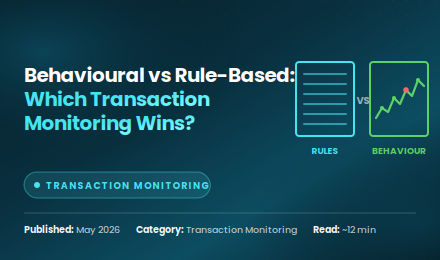
Behavioural vs Rule-Based Transaction Monitoring: Which Works Better?
Behavioural and rule-based transaction monitoring are often presented as competing approaches. They are not. This guide explains where each is structurally stronger, where they overlap, how regulators view…
 Transaction Monitoring
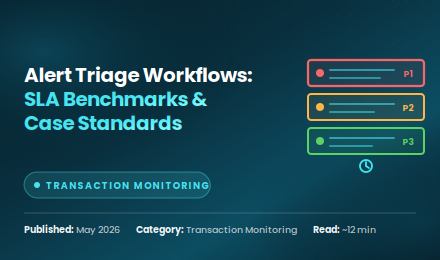
Alert Triage Workflows: SLA Benchmarks & Case Handling Standards
Alert triage is where transaction monitoring becomes operational compliance. This guide covers the priority tiers regulators expect, the SLA benchmarks production programmes use, the escalation thresholds that distinguish…
 Transaction Monitoring
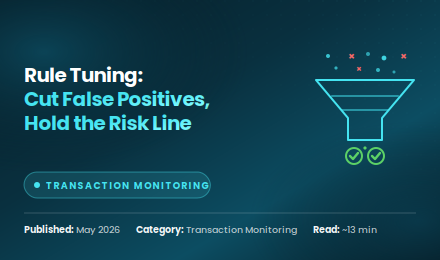
Transaction Monitoring Rule Tuning: Reduce False Positives Without Adding Risk
False-positive rates of 95%+ are the operational norm in transaction monitoring — and most of the noise reduction available is achievable without weakening detection. This guide covers the…
 Adverse Media Screening
Adverse Media Screening Sources: Open Web vs Licensed Data
Adverse media screening sources fall into three categories — open web, licensed news feeds, and structured AML intelligence. Each has different strengths, limitations, cost and coverage. This guide…
 Financial Crime
Sanctions Evasion Red Flags: 12 Patterns Compliance Teams Miss
Designated parties do not put their own names on transactions. Sanctions evasion happens through front companies, transhipment, payment routing, and ownership obfuscation — patterns that name-matching screening cannot…
 Sanctions Screening
Watchlist Management: How Often Should You Rescreen Customers?
Single-snapshot screening at onboarding leaves the firm exposed to every list update made after the customer joined. This guide covers how often to rescreen customers, frequency calibration by…
 Politically Exposed Persons (PEP)
PEP Screening Best Practices: Identifying Politically Exposed Persons
PEP screening is one of the controls regulators scrutinize most aggressively — and one most firms execute inconsistently. This guide covers the four-tier classification model, Relatives & Close…
 Sanctions Screening
Sanctions List Screening: OFAC, UN, EU, UK & MAS Compared
Every regulated firm must screen against sanctions lists — but the six major lists differ materially in scope, update cadence and extraterritorial reach. This guide compares OFAC, UN,…