KYC drop-off is one of the most significant and least-discussed costs in financial services. Firms lose nearly half their prospective customers at the compliance gate — before a single revenue-generating relationship has begun.
Manual vs Automated KYC: Why Financial Firms Are Switching
Manual KYC takes up to 14 days per customer, costs £200 per onboarding, and introduces inconsistency at every step. Automated KYC completes the same process in minutes, at a fraction of the cost, with a fully auditable record.
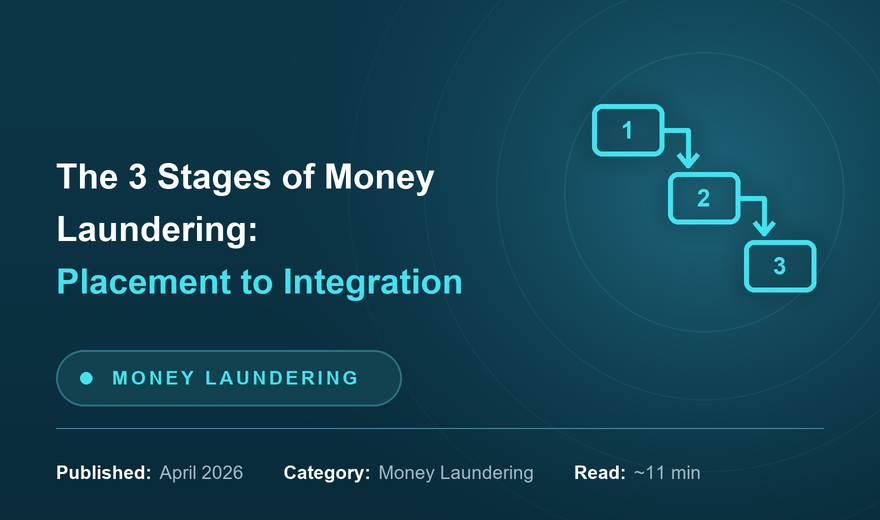
The 5 Stages of Money Laundering Compliance Officers Must Know
The traditional three-stage model — placement, layering, integration — is necessary but insufficient. Compliance officers must also understand the predicate offence and the concealment mechanisms operating throughout the entire laundering process
Customer Due Diligence (CDD) vs Enhanced Due Diligence (EDD): When to Use Each
CDD and EDD are not alternatives — they sit on a spectrum of due diligence intensity, with the appropriate level determined by the assessed risk of the customer and the business relationship.
PEP Screening Explained: What Compliance Teams Need to Know
A Politically Exposed Person holds a prominent public role that raises their money laundering risk and triggers Enhanced Due Diligence. Learn who qualifies, what FCA and FATF regulations require, and how automated PEP screening works in practice.
KYC vs KYB: What’s the Difference and Why It Matters
KYC verifies individual customers while KYB verifies corporate entities, directors, and ultimate beneficial owners — two distinct processes with different regulatory requirements. Understanding the difference is fundamental to building a compliant onboarding programme that satisfies FCA, FinCEN, and FATF obligations.