
 Know Your Business (KYB)
KYC Onboarding Automation: How to Reduce Drop-Off Rates
KYC drop-off is one of the most significant and least-discussed costs in financial services. Firms lose nearly half their prospective customers at the compliance gate — before a…
 Compliance
How to Build a Compliance Programme from Scratch for Fintech Startups
Fintech startups must build a regulatory-grade compliance programme from day one of regulated activity. The FCA expects documented policies, a designated MLRO, CDD procedures, transaction monitoring, sanctions screening,…
 Anti Money Laundering (AML)
The Real Cost of AML Non-Compliance (Fines, Reputation, Operations)
The headline fine is typically the smallest component of AML non-compliance costs. The full impact encompasses remediation programmes, business restrictions, legal fees, reputational damage, and — in the…
 Anti Money Laundering (AML)
How to Choose AML Transaction Monitoring Software: 7 Criteria
Choosing AML transaction monitoring software requires evaluating detection quality, false positive rates, real-time capability, system integration, scalability, regulatory alignment, and case management workflow — because the cost of…
 Know Your Business (KYB)
Manual vs Automated KYC: Why Financial Firms Are Switching
Manual KYC takes up to 14 days per customer, costs £200 per onboarding, and introduces inconsistency at every step. Automated KYC completes the same process in minutes, at…
 Compliance
GDPR and AML: How Financial Firms Navigate Both Regulations
GDPR and AML obligations operate in parallel, not in conflict. Specific provisions in each framework govern their interaction, with legal bases under UK GDPR explicitly permitting personal data…
 Anti Money Laundering (AML)
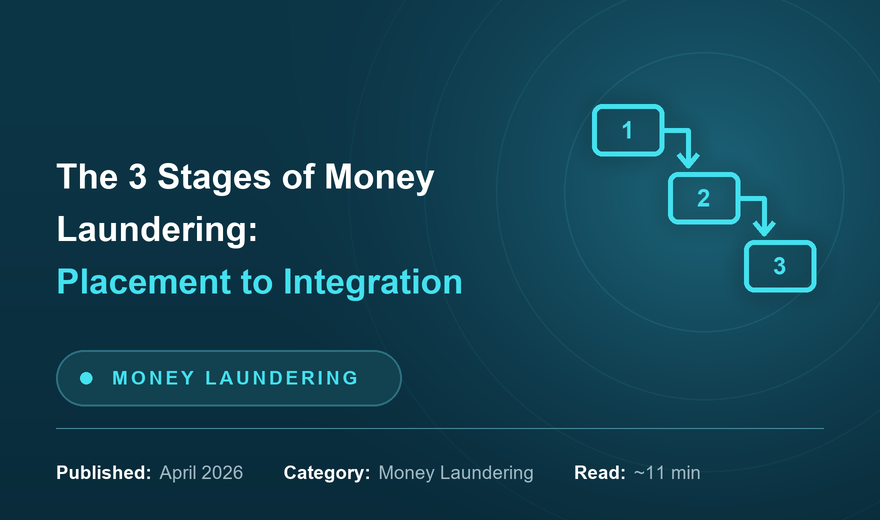
The 5 Stages of Money Laundering Compliance Officers Must Know
The traditional three-stage model — placement, layering, integration — is necessary but insufficient. Compliance officers must also understand the predicate offence and the concealment mechanisms operating throughout the…
 Know Your Business (KYB)
Customer Due Diligence (CDD) vs Enhanced Due Diligence (EDD): When to Use Each
Customer Due Diligence (CDD) vs Enhanced Due Diligence (EDD): When to Use Each CDD and EDD are not alternatives — they sit on a spectrum of due diligence…
 Financial Crime Risk Management (FCRM)
FinCEN BSA Compliance: A Plain-English Guide for US Financial Firms
The Bank Secrecy Act creates binding AML obligations for every US financial institution — from banks and broker-dealers to money services businesses and insurance companies. Non-compliance carries unlimited…