
 Regulations
MAS Notice 626 Explained: AML/CFT Requirements and Guidelines for Singapore Banks
MAS Notice 626 is the binding AML/CFT instrument for banks in Singapore, and the Guidelines to MAS Notice 626 are the document MAS measures a bank's programme against.…
 Financial Crime
Money Mule Detection: Recruitment Patterns & Red Flags
Money mules are how criminal proceeds re-enter the financial system disguised as ordinary retail activity. This guide covers the three types of mules (witting, unwitting, complicit), how they…
 Money Laundering
Shell Company Red Flags: How to Spot Front Companies
Shell companies have legitimate uses and are the workhorses of money laundering structures. Distinguishing legitimate use from front-company abuse is one of the harder KYB calls compliance teams…
 Money Laundering
Smurfing & Structuring: Detection Patterns for Compliance Teams
Structuring and smurfing are the foundational placement-stage typologies — and the controls regulators inspect first. This guide covers the definitional difference between the two, six recurring patterns, the…
 Transaction Monitoring
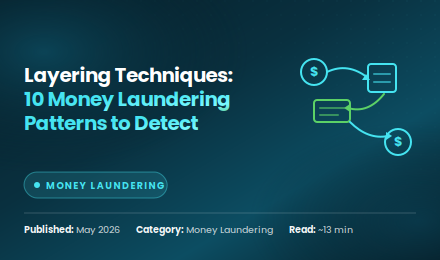
Layering Techniques: 10 Money Laundering Patterns to Detect
Layering is the most operationally complex stage of money laundering — the part where proceeds are moved through transaction chains specifically designed to obscure their origin. This guide…
 Transaction Monitoring
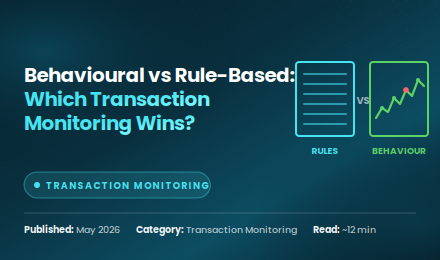
Behavioural vs Rule-Based Transaction Monitoring: Which Works Better?
Behavioural and rule-based transaction monitoring are often presented as competing approaches. They are not. This guide explains where each is structurally stronger, where they overlap, how regulators view…
 Transaction Monitoring
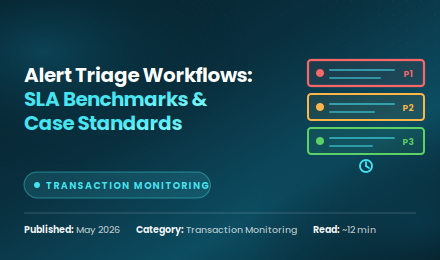
Alert Triage Workflows: SLA Benchmarks & Case Handling Standards
Alert triage is where transaction monitoring becomes operational compliance. This guide covers the priority tiers regulators expect, the SLA benchmarks production programmes use, the escalation thresholds that distinguish…
 Transaction Monitoring
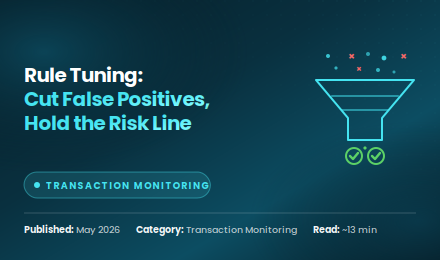
 Rule Tuning: Reduce False Positives Without Adding Risk
False-positive rates of 95%+ are the operational norm in transaction monitoring — and most of the noise reduction available is achievable without weakening detection. This guide covers the…
 Adverse Media Screening
 Sources: Open Web vs Licensed Data
Adverse media screening sources fall into three categories — open web, licensed news feeds, and structured AML intelligence. Each has different strengths, limitations, cost and coverage. This guide…